UltraEdit
Product marketing and commercial growth for an established software product.
Product marketing
Launches
CRO
Context
UltraEdit is a professional text editor used by developers, IT teams, analysts, and other technical users.
The product has been on the market for more than 30 years, but traffic, trial activations, and paying users had been declining.My role covers both core product marketing and growth work: positioning, messaging, product launches, website strategy, lifecycle communication, pricing, campaigns, SEO and AI visibility, adoption, and performance analysis.
A major part of the job has been finding where the product story or customer journey no longer works, then turning those findings into changes the wider team can execute.
The product has been on the market for more than 30 years, but traffic, trial activations, and paying users had been declining.My role covers both core product marketing and growth work: positioning, messaging, product launches, website strategy, lifecycle communication, pricing, campaigns, SEO and AI visibility, adoption, and performance analysis.
A major part of the job has been finding where the product story or customer journey no longer works, then turning those findings into changes the wider team can execute.
What I worked on
- Positioning and messaging
- Product and feature launches
- Website and CRO optimization
- Pricing and packaging
- Trial and onboarding journeys
- Lifecycle and adoption campaigns
- SEO and AI visibility
- Paid campaign planning and optimisation
Selected initiatives
1. Repositioning UltraEdit
UltraEdit was primarily positioned around its ability to open and edit very large files. It was a credible differentiator, but too narrow to represent why most users chose and relied on the product.
What I worked on:
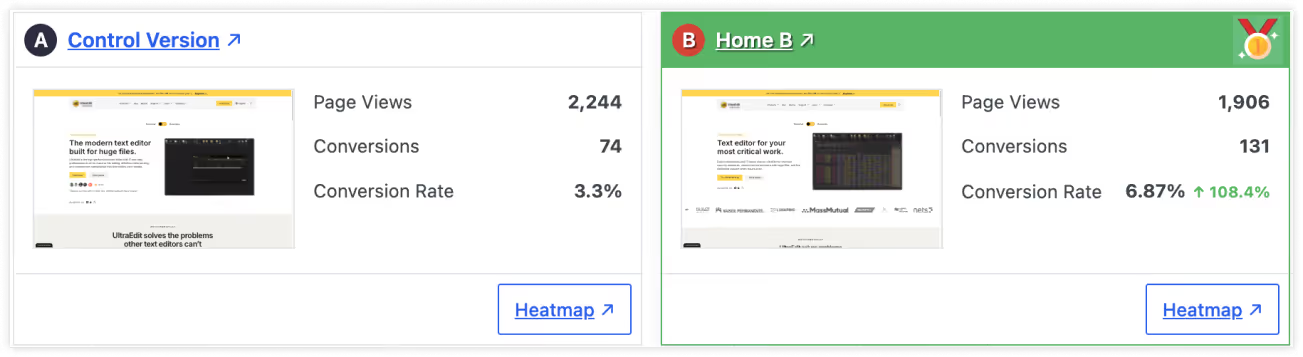
I developed a broader positioning direction around UltraEdit as an editor for critical work: reliable, secure, commercially maintained, and capable of handling demanding technical tasks. The new message was translated into homepage concepts and tested against the existing direction.
Outcome:
The new positioning gave UltraEdit a stronger story beyond one technical feature. In an A/B test, the revised homepage increased conversion to the free-trial page by 108%.
2. Product launches and lifecycle communication
UltraEdit releases regularly across Windows, macOS, and Linux, but launch communication needed to do more than list new features and fixes.
What I worked on:
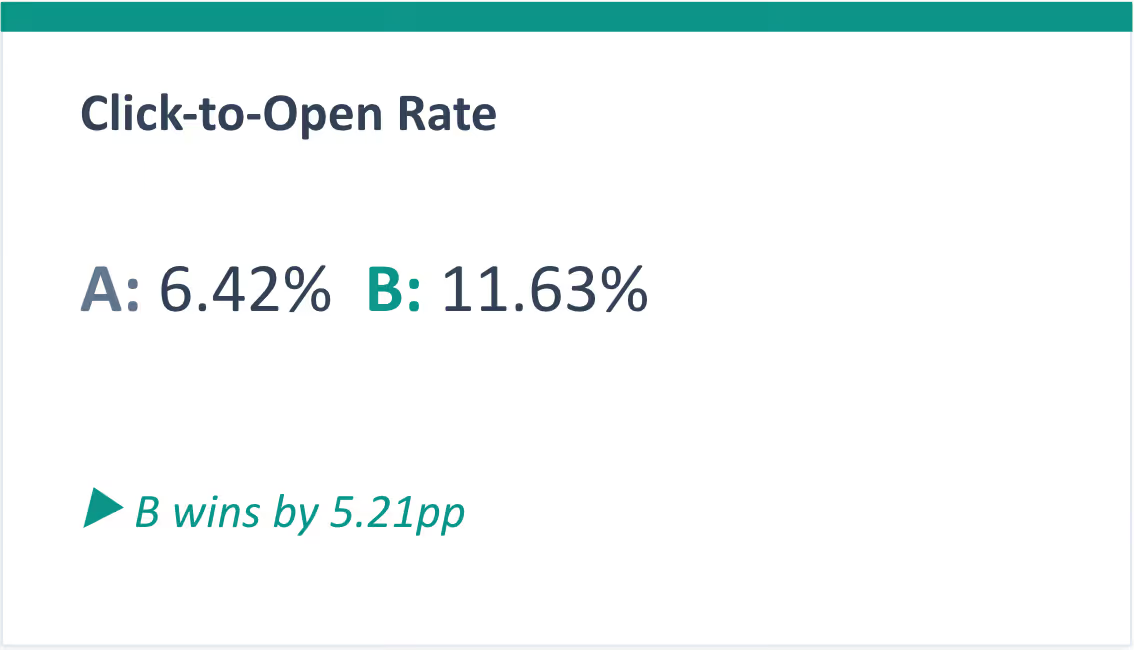
I shaped release narratives, product-page updates, email campaigns, videos, and social communication around the value of each release. I also rebuilt the nurture sequence to better explain the product, address objections, and give trial users clearer reasons to return.
Outcome:
Launch and lifecycle communication became clearer and more consistent across channels. The updated nurture sequence increased click-to-open rate from 6.4% to 11.6%.
3. Rebuilding brand visibility and demand
A long-running decline in leads was not a conversion problem. The bigger issue was falling branded traffic, which pointed to weaker brand awareness and fewer people actively looking for the product.
What I worked on:
I helped shift the focus toward rebuilding visibility across organic search, AI discovery, Reddit, LinkedIn, and YouTube. That included identifying content gaps, refreshing existing pages, creating new search-led content, and building a more active presence across community and video channels.
To support the volume of work, I built a small team of Claude Code agents for research, SEO, AI visibility, content planning, and page optimisation.
To support the volume of work, I built a small team of Claude Code agents for research, SEO, AI visibility, content planning, and page optimisation.
outcome:
Direct and organic traffic started moving in the right direction, while the decline in leads was reversed. The team also gained a more repeatable system for producing and improving content across channels.
The outcome
The work moved UltraEdit from narrow, feature-led marketing toward a broader product story built around reliability, security, and critical work.
That direction carried through the website, launches, lifecycle communication, content, and campaigns. At the same time, a stronger focus on brand visibility, SEO, AI discovery, and owned channels helped direct and organic traffic recover and reversed the long-running decline in leads.
The result was not one isolated win, but a more consistent product marketing system tied to trial activations, paying users, and long-term demand.
That direction carried through the website, launches, lifecycle communication, content, and campaigns. At the same time, a stronger focus on brand visibility, SEO, AI discovery, and owned channels helped direct and organic traffic recover and reversed the long-running decline in leads.
The result was not one isolated win, but a more consistent product marketing system tied to trial activations, paying users, and long-term demand.
More Cases
Viktar Milasheuski
Getting better as a product marketer every day except Sundays
viktar.milasheuski@gmail.com